Runtime Obfuscation Decoded: How Modern Defenders Stay Ahead
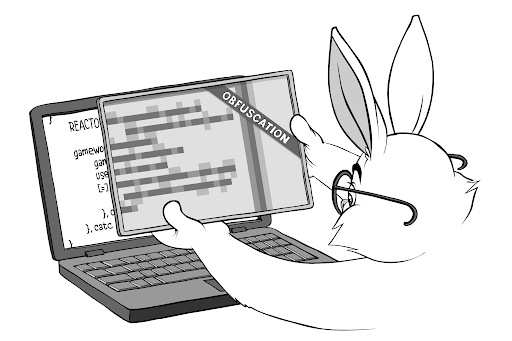
In modern cybersecurity operations, defenders must understand offensive evasion techniques in depth to craft robust detection strategies. Each section below explains a key runtime obfuscation method, shows an attacker’s implementation, and then dives deeply into how defenders can detect, analyze, and build resilient alerts.
1. String Obfuscation and Decryption
Attackers encrypt known indicators—process names, API calls, keywords—in the binary to avoid static signature matches. At runtime, they decrypt these only when needed.
Offensive Example: Multi-byte XOR
1
2
3
4
5
6
7
std::vector<uint8_t> multiXorDecrypt(const std::vector<uint8_t>& data, const std::vector<uint8_t>& key) {
    std::vector<uint8_t> result(data.size());
    for (size_t i = 0; i < data.size(); ++i) {
        result[i] = data[i] ^ key[i % key.size()];
    }
    return result;
}
Defensive Deep Dive
- Behavioral Monitoring: Create EDR rules that trigger when a process allocates memory or reads encrypted blobs then performs XOR-like operations. Use heuristic detectors to spot repeated byte-wise transformations.
- Telemetry Correlation: Combine memory write events with subsequent API usage (e.g., WriteProcessMemory, CreateProcess). If encryption/decryption is followed immediately by sensitive operations, flag for review.
- Integrity Baselines: Profile legitimate application memory patterns; unusual allocations or writes that deviate from the baseline may indicate malicious decryption routines.
- Custom Detection: Write YARA rules that match the decryption stub’s byte patterns (e.g., loops with XOR and modulo), not the decrypted strings.
2. Dynamic API Resolution
Attackers bypass the Import Address Table (IAT) by loading libraries and resolving function addresses at runtime.
Offensive Example: Hash-based Lookup
1
2
3
4
5
uint32_t hashFn(const char* s) {
    uint32_t hash = 0;
    while (*s) { hash = _rotl(hash, 13) ^ (uint32_t)(*s++); }
    return hash;
}
Defensive Deep Dive
- API Resolution Analytics: Monitor suspicious LoadLibrary/GetProcAddress patterns, especially repeated calls in quick succession. Alert when non-system processes perform export parsing.
- Process Profiling: Maintain a whitelist of expected dynamic loads per application. Any deviation (e.g., numeric-hash based lookups) triggers an alert.
- Stack Trace Inspection: On detection of critical API use (e.g., OpenProcess), capture the call stack. If resolution wasn’t via IAT, escalate to SOC for investigation.
- Anomaly Scoring: Assign risk scores when dynamic resolution is combined with privilege escalation or suspicious thread injections.
3. Encrypted In-Memory Payload Execution
Attackers avoid disk footprints by loading and decrypting payloads entirely in memory.
Offensive Example: Manual PE Mapping
1
2
3
4
5
6
void* loadRemotePE(const uint8_t* data, size_t size) {
    void* alloc = VirtualAlloc(NULL, size, MEM_COMMIT | MEM_RESERVE, PAGE_READWRITE);
    memcpy(alloc, data, size);
    VirtualProtect(alloc, size, PAGE_EXECUTE_READ, NULL);
    return alloc;
}
Defensive Deep Dive
- Memory Page Protections: Configure EDR to alert when a process transitions memory pages from RW to RX outside known loader modules (e.g., without standard Windows loader calls).
- Reflective Mapping Detection: Use PE-sieve or similar to scan process memory for manually mapped executables lacking valid DOS/NT headers at expected offsets.
- Granular Logging: Enable detailed Windows Audit policies for VirtualAlloc/VirtualProtect calls. Correlate with process IDs and parent-child relationships to spot unusual mapping sequences.
- Incident Response Playbook: When manual mapping is detected, automatically snapshot process memory and dump threads for offline static analysis.
4. Advanced Control Flow Obfuscation
Sophisticated malware uses opaque predicates and flattened flows to confuse static and dynamic analyzers.
Offensive Example: Opaque Predicate
1
2
3
4
bool opaqueTrue() {
    int x = rand();
    return ((x * x) >= 0);
}
Defensive Deep Dive
- Branch Coverage Analysis: Instrument critical applications in testing environments to measure branch coverage. Unused branches or always-true predicates indicate potential obfuscation.
- Runtime Analytics: Deploy behavioral engines that model normal control flows. Deviations (e.g., constant use of opaque predicates) generate high-severity alerts.
- Sandbox Detonation: Run suspicious binaries in sandboxes with code coverage tools. Obfuscated control flows often break when environmental checks fail, revealing evasion patterns.
5. Indirect Syscalls and Unhooking
By invoking syscalls directly, attackers evade user-mode hooks placed by EDR drivers.
Offensive Example: Inline Assembly Stub
1
2
3
4
5
6
7
8
__declspec(naked) NTSTATUS callNtTestAlert() {
    __asm {
        mov r10, rcx
        mov eax, 0x22  // syscall number
        syscall
        ret
    }
}
Defensive Deep Dive
- Syscall Monitoring: Enable kernel-level logging of syscall numbers. Alert when non-standard modules issue syscalls instead of invoking user-mode APIs.
- Hook Verification: Periodically verify integrity of ntdll.dll exports in memory. Unexpected patches may indicate unhooking attempts.
- Process Isolation: Restrict sensitive processes with stricter syscall whitelists; block any out-of-line syscalls.
6. OPSEC Considerations
Attackers add random delays, sandbox checks, and anti-debugging to reduce detection chances.
Defensive Deep Dive
- Timing Analysis: Record process execution timelines; excessive jitter or sleep patterns outside normal operations signal evasion.
- Anti-Sandbox Detection: Monitor uncommon API calls (e.g., RDTSC, CPUID) used for environment fingerprinting and treat them as high-risk indicators.
7. Detection Logic and Validation
- DefenderCheck: Automated testing against configured detection rules.
- PE-sieve: Periodic scans for manual mappings and in-memory payloads.
- ProcMon: Live capture of anomalous API sequences and file operations.
- SIEM Correlation: Combine logs from endpoints, network, and authentication systems to identify patterns of obfuscation usage.
8. Trade-Offs and Risk Management
| Technique | Detects | Complexity | Risk Level |
|---|---|---|---|
| Multi-byte XOR | Memory transformation patterns | Low | Low |
| AES Decryption | Crypto API calls | Medium | Medium |
| Hash-based API Resolution | Dynamic import analytics | Medium | Medium |
| Manual PE Mapping | Memory protection changes | High | High |
| Opaque Predicates | Coverage anomalies | High | High |
| Inline Syscalls | Raw syscall invocation | Very High | Very High |
Balance detection depth with resource constraints—prioritize high-risk techniques first.
Conclusion
By layering these detection strategies, defenders can significantly raise the bar for runtime obfuscation attackers. Continuous validation, telemetry tuning, and proactive threat emulation ensure robust operational security.